
East SA navigating history and barriers in pursuit of economic equity
By W. Scott Bailey – Senior Reporter, San Antonio Business Journal
Feb 3, 2022 Updated Feb 3, 2022, 2:58pm CST
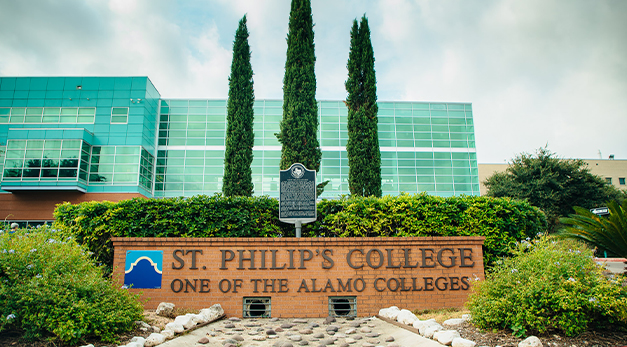
St. Philip’s College, founded in 1898 as an industrial school for recently freed slaves, is now a microcosm of the hope and hurdles that help define San Antonio’s inner East Side.
While the institution provides access to higher education — with a high percentage of its students moving on to advanced degrees or into the workforce with living-wage jobs— it’s also a safety net for those in need food, clothing or shelter.
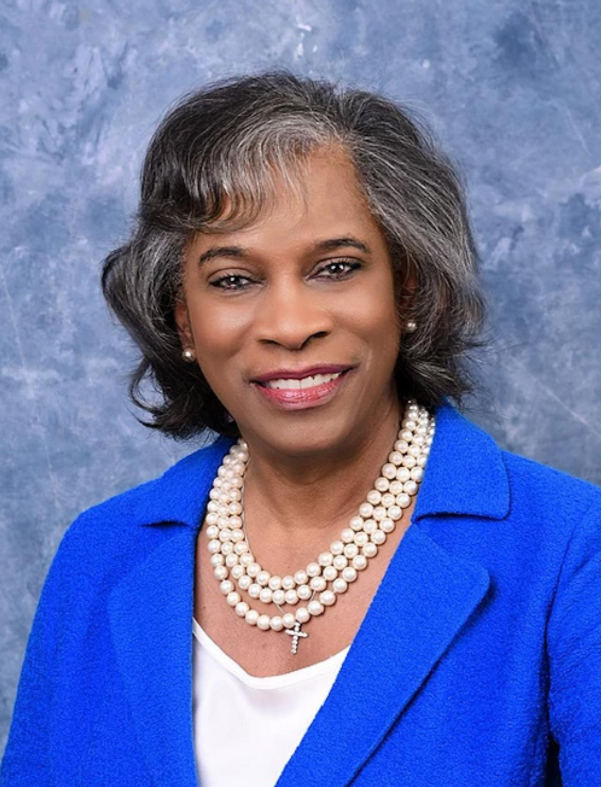
“We have students who sleep in cars,” St. Philip’s College President Dr. Adena Williams Loston said. “When our students come to us, we understand that it is not just the education agenda that we must address.”
Loston insists that St. Philip’s has always acknowledged and celebrated diversity.
“That is something we have never shied away from,” she said. “A lot of good comes out of the East Side. But there are still areas that need to be addressed.”
That includes balancing new development that lifts an area where more than 20% of its residents age 15 or older earn less than $10,000 a year instead of pricing residents and businesses out of their community.
“I think the biggest challenges will be driving continuous investment amid evolving expectations about dealing with gentrification and displacement,” Mayor Ron Nirenberg said. “We have limited tools at the local level to deal with those challenges in an equitable way when you have very little cooperation — and, in fact, the opposite — from the state.”
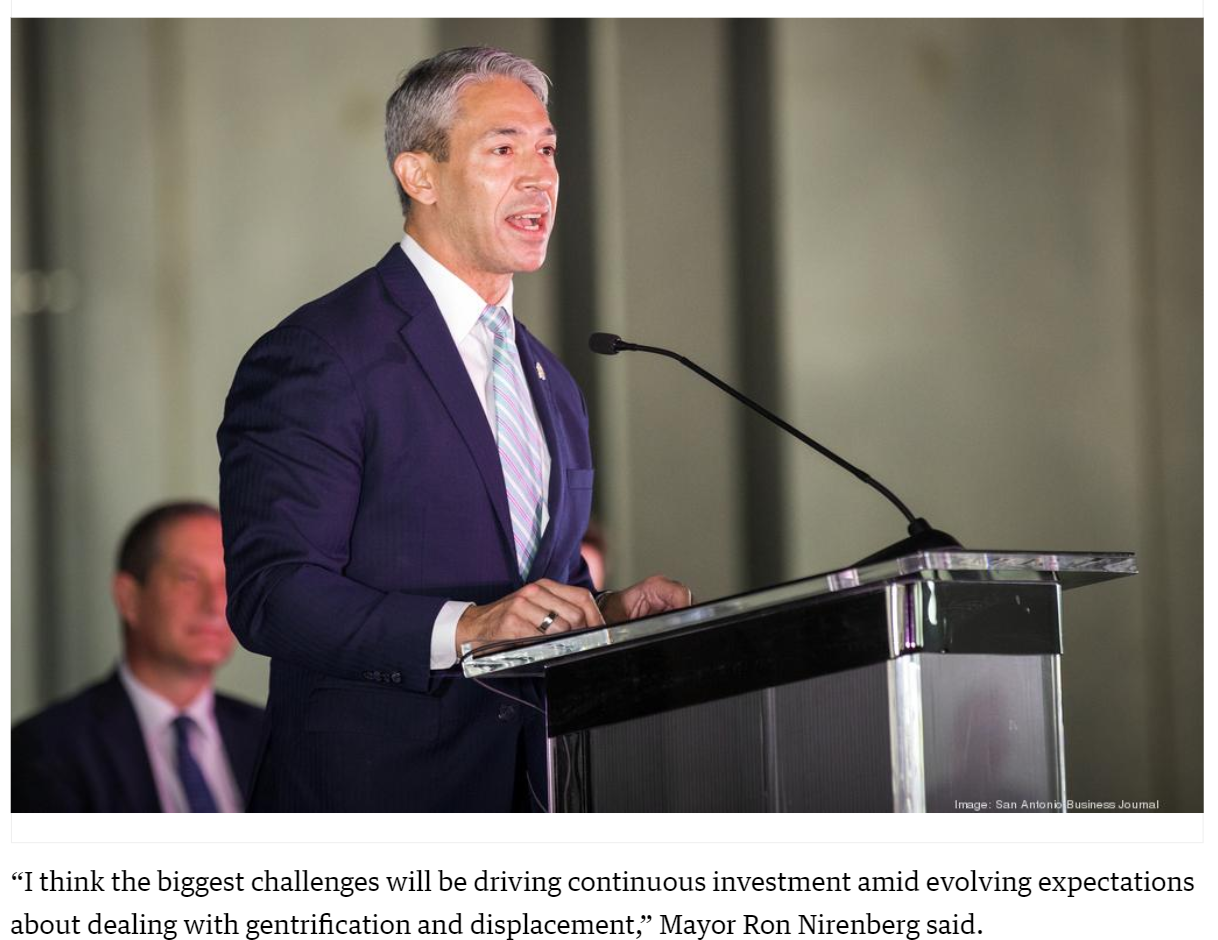
Nirenberg knows such progress requires a hefty lift.
“Parts of town have been under invested in, disinvested in and, frankly, left out of generations of economic prosperity,” he said. “That is our history. It’s not one anyone should be proud of. But it’s one that we have to deal with and rectify.”
Spreading the wealth
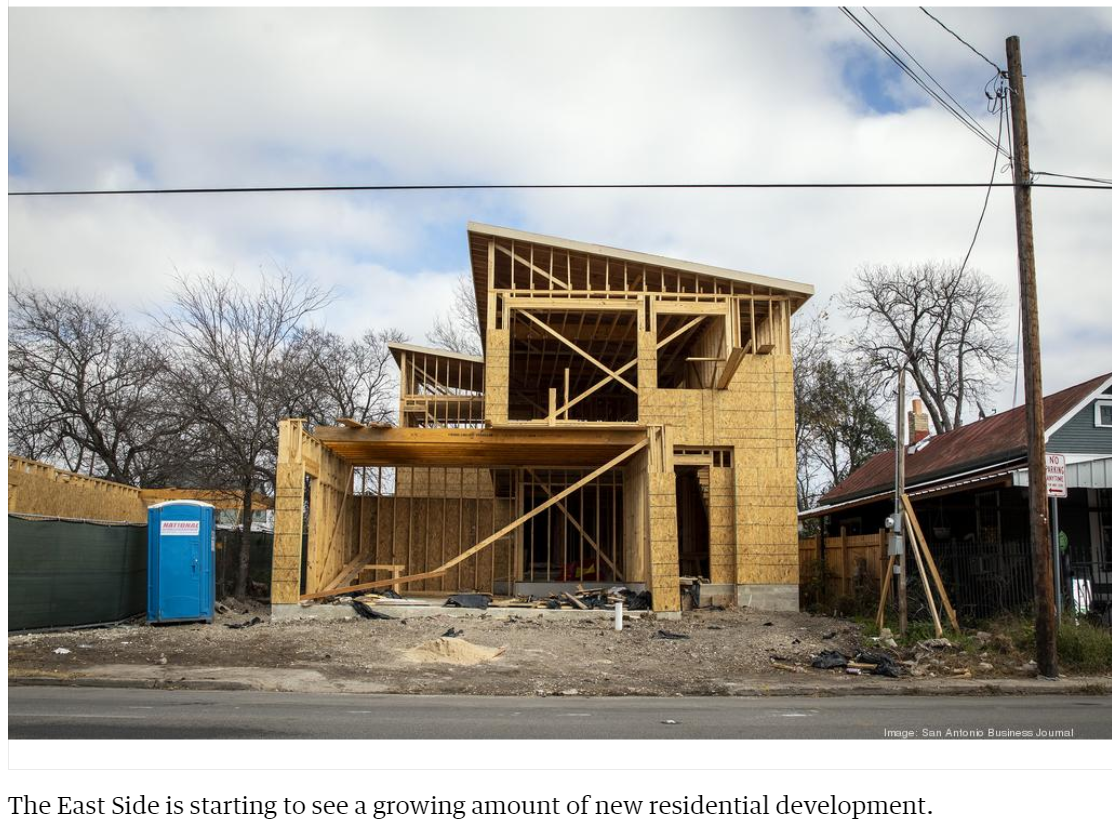
As San Antonio has experienced significant growth, its urban core has undergone dynamic change over the last decade with an influx of new investment, jobs and housing. Some of that activity has spread to the north, south and west of the center city.
East San Antonio is still looking for some of that spinoff. Robert Melvin, CEO of San Antonio for Growth on the Eastside, said his organization is working with public officials and with greater:SATX, formerly the San Antonio Economic Development Foundation, to foster more equitable investment without creating additional displacement.
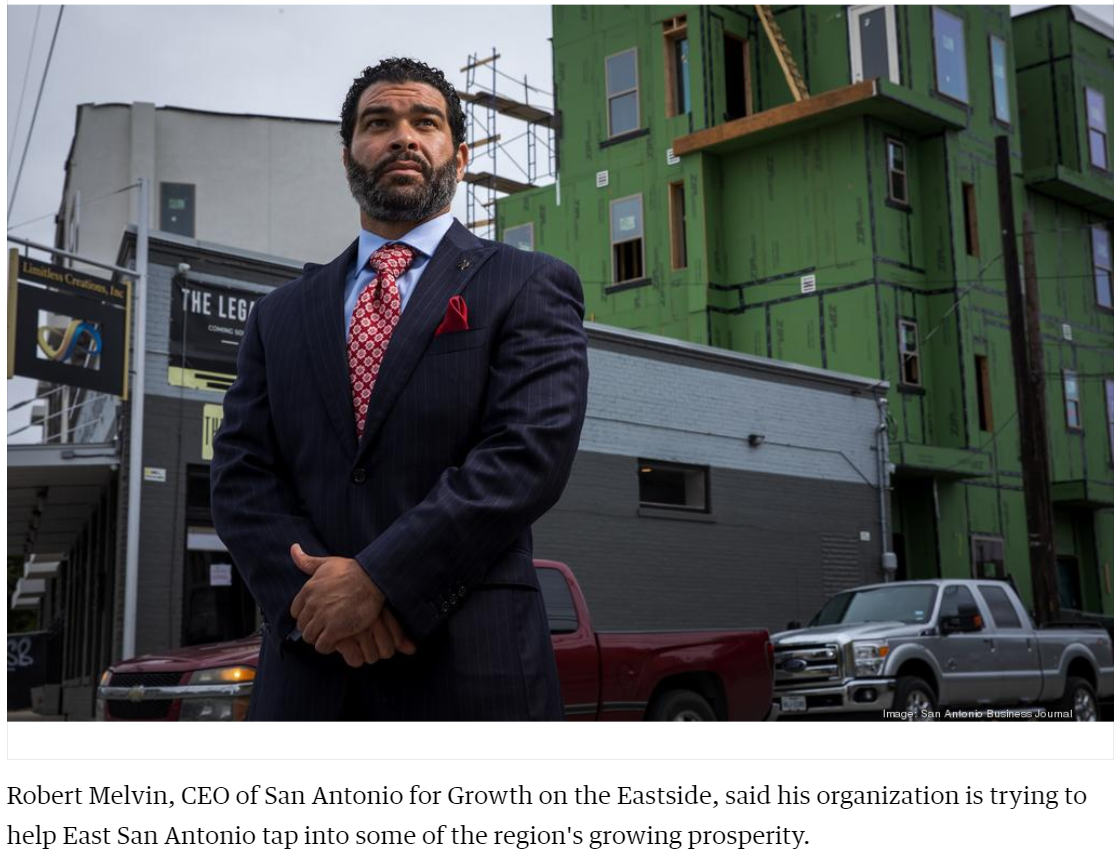
“We recognize that there is a tremendous amount of opportunity for us to highlight the assets on the East Side and to do so in a way that furthers the economic development growth strategy while maintaining the cultural and the community feel that currently exists,” he said.
There is a fine line between diversification and gentrification, according to Melvin. Miss the mark and local leaders could compound the problems.
“We have to reclaim ownership of real estate on the East Side,” he said. “We have to identify the barriers that homeowners are facing and understand what the pain point is that is causing people to divest their interest and their land and move away.”
Melvin is hopeful SAGE can launch a community development corporation to advance the dialogue and help retain more of the businesses within its footprint.
“I’m a believer if the people at the table are pure in their intentions,” he said.
Thomas Tunstall, senior economic research director and the UTSA Institute for Economic Development, believes some progress is being made.
“It’s just really slow,” he said, warning that economic change that comes too fast can prove more damaging. “Then you start to worry about the gentrification.”
One way San Antonio could proactively address displacement, Tunstall said, is to create community land trusts that help protect against skyrocketing property values.
In East Austin, for example, the Guadalupe Neighborhood Development Corp. is using a community land trust to buy up acreage, leasing back the housing on that real estate at affordable rates and preventing spikes in property taxes. West San Antonio leaders are considering a similar strategy.https://dde265aa6f899b999fd47610d452c5d1.safeframe.googlesyndication.com/safeframe/1-0-38/html/container.html
Delivering the level of change needed to bring about greater economic equity in East San Antonio without driving away more of its people and culture is a complex task. Tunstall said market-based solutions may not be the best approach.
“If you want diversity and equity in your community, you’ve got to consciously plan for it,” he said.
Leveraging reinvestment
In 2017, the Texas Research and Technology Foundation planted its flag along E. Houston Street near Interstate 37, purchasing the Merchant’s Ice building, a long underused cold storage facility. At the time, the group touted its intent of developing a campus that could boost San Antonio’s biotech industry and draw other activity and jobs east of downtown.
TRTF has redeveloped two of the buildings on its campus and secured multiple tenants, including BioBridge Global’s GenCure Biomanufacturing Facility. Now the organization is redeveloping a third building on site and CEO Randy Harig said redevelopment of four more campus buildings will start over the next several months.
Stakeholders are hopeful they can leverage the VelocityTX campus into a wider innovation district.
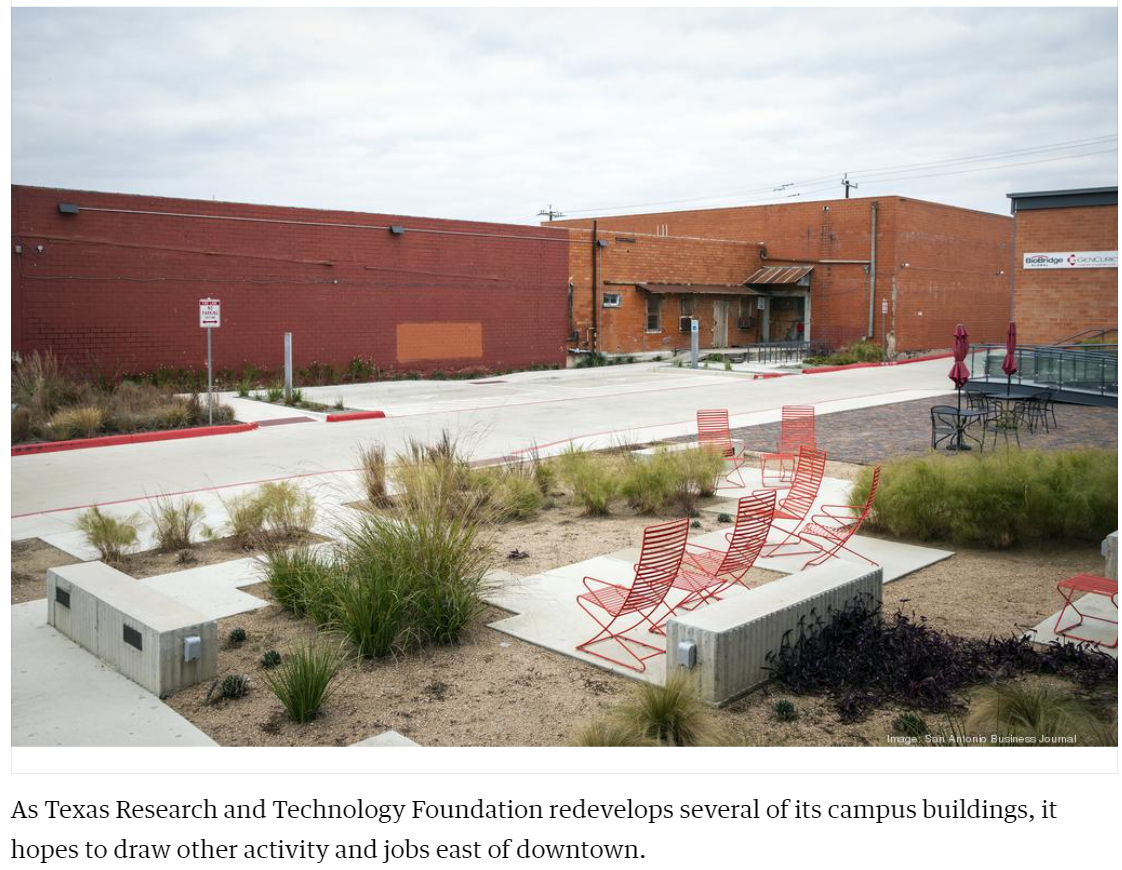
“There’s been a lot of buy-in for what we’re doing as a catalyst to growth in this area,” Harig said, acknowledging that there remain some challenges.
That includes decades of distrust among East Side leaders who have seen promises broken by others in the past.
“We spend a good part of our time in the community meeting with people and trying to make sure that they see value in what we’re doing,” he said.
Nirenberg is convinced that TRTF is on the right track.
“Their approach is spot on because they are looking at ways to enhance economic mobility in the surrounding area,” he said.
Breaking through the barriers
St. Philip’s job-placement rate exceeds 90%, according to Loston. Yet, education remains a barrier for some on the East Side.
“Education is the engine that’s going to drive people out of disparities, creating opportunities, allowing for social mobility, financial security,” she said.
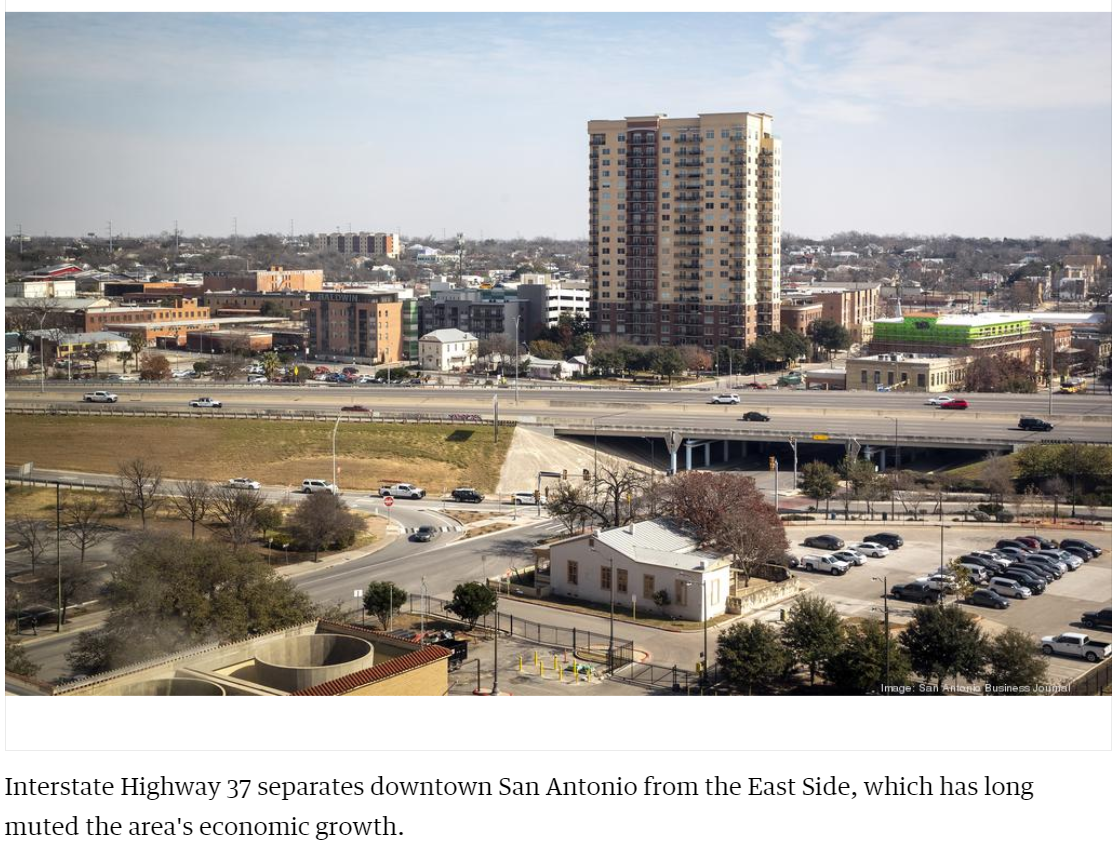
Another barrier to economic growth in the area is the the stretch of Interstate 37 that physically separates it from downtown. The Hemisfair Park Area Redevelopment Corp. has sought $9 million in 2022 municipal bond funding for construction of the last leg of Hemisfair Boulevard that would reconnect the redeveloped 1968 World’s Fair site and its neighbors across the freeway.
Completion of that boulevard would enable two-way traffic on Montana Street, “restitching” the neighborhood that existed prior to the fair, HPARC CEO Andres Andujar said.
“It’s vital,” Nirenberg said. “Downtown and the central business district are the nucleus of our economy. As we build nodes and create economic development hubs, it’s critically important that they are connected to the core — not just for the purposes of economic development but for quality of life and equity.”