
The real estate industry is undergoing a global transformation that is altering the way we live, work and play.
EY US-East Region Market Segment Leader – Real Estate, Hospitality and Construction Sector
In brief
-
Ensuring health, safety and well-being of employees, consumers and tenants are integral to real estate environmental, social and governance (ESG) strategies.
-
Healthy buildings enhance occupant satisfaction, improve leasing rates and increase building value.
-
Proactive building owners and occupiers who ensure sustainable, healthy buildings build resilience and prepare themselves for what’s next and beyond.
As the social and economic impacts of the COVID-19 pandemic continue to emerge on the global stage, indoor air quality, for example, has emerged as a top priority for keeping building occupants safe and healthy. Business owners are reimagining workspaces and remote work arrangements, while retailers and restaurant operators continue to convert their physical spaces for social distancing or, in some cases, for an entirely new use.
Against this backdrop, the expectations that office, retail, hotel and residential users have of asset owners have grown exponentially, and there is no shortage of new challenges and opportunities for commercial landlords.
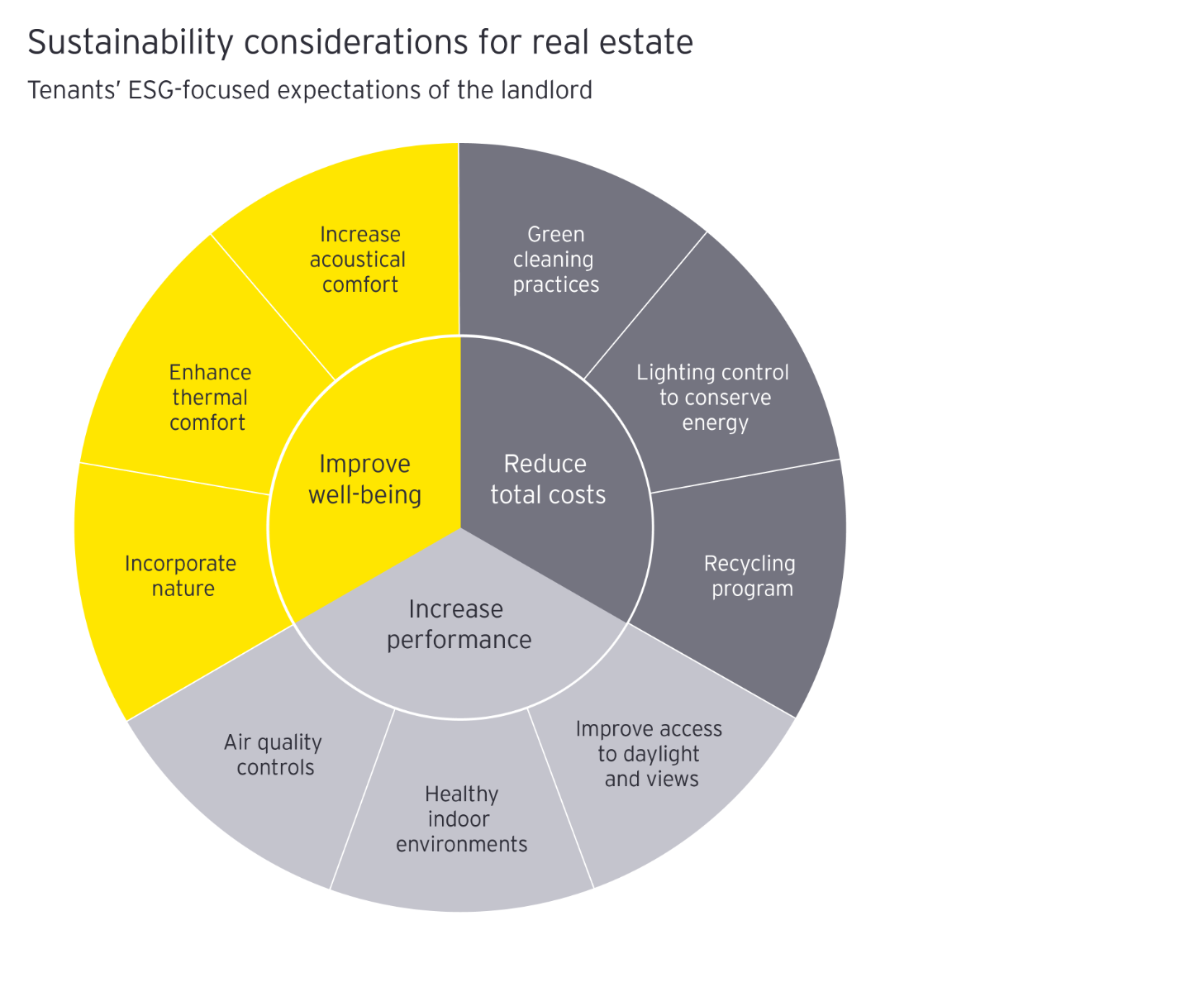
Demands for reduced operating costs, increased performance and improved occupant well-being are being met through sustainable environments that feature ergonomic furnishings, biophilic elements, natural daylight and living green walls, and healthy buildings that have natural ventilation, enhanced thermal comfort, improved air quality and green purchasing policies. Just one of the many innovative examples is a manufacturer of smart windows that tint automatically based on outdoor and indoor conditions, improving people’s health and wellness, while simultaneously reducing energy consumption.
Another example of how technology is being deployed to transform the real estate industry is the digital twin — essentially a virtual copy of a building. Digital twins have the potential to help bridge the physical and virtual world for building owners and operators by leveraging data analysis, building simulation, internet of things, artificial intelligence, machine learning and robotic process automation. The resulting assessment, calibration, modeling and scenario planning capabilities within the building’s digital twin enables more efficient operations, reduced maintenance, increased energy savings and real-time decision-making support for the physical building. As landlords take steps to improve air quality inside their buildings through smart building, the health of a building will be considered an amenity by its occupants.
Overall, healthy buildings enhance occupant satisfaction, improve leasing rates and increase building value. As a workspace, buildings with better air quality and more natural light have less absenteeism and, thus, less turnover and higher worker productivity, which translates into financial savings and increased value for the business. Similar benefits apply to retail and residential buildings.
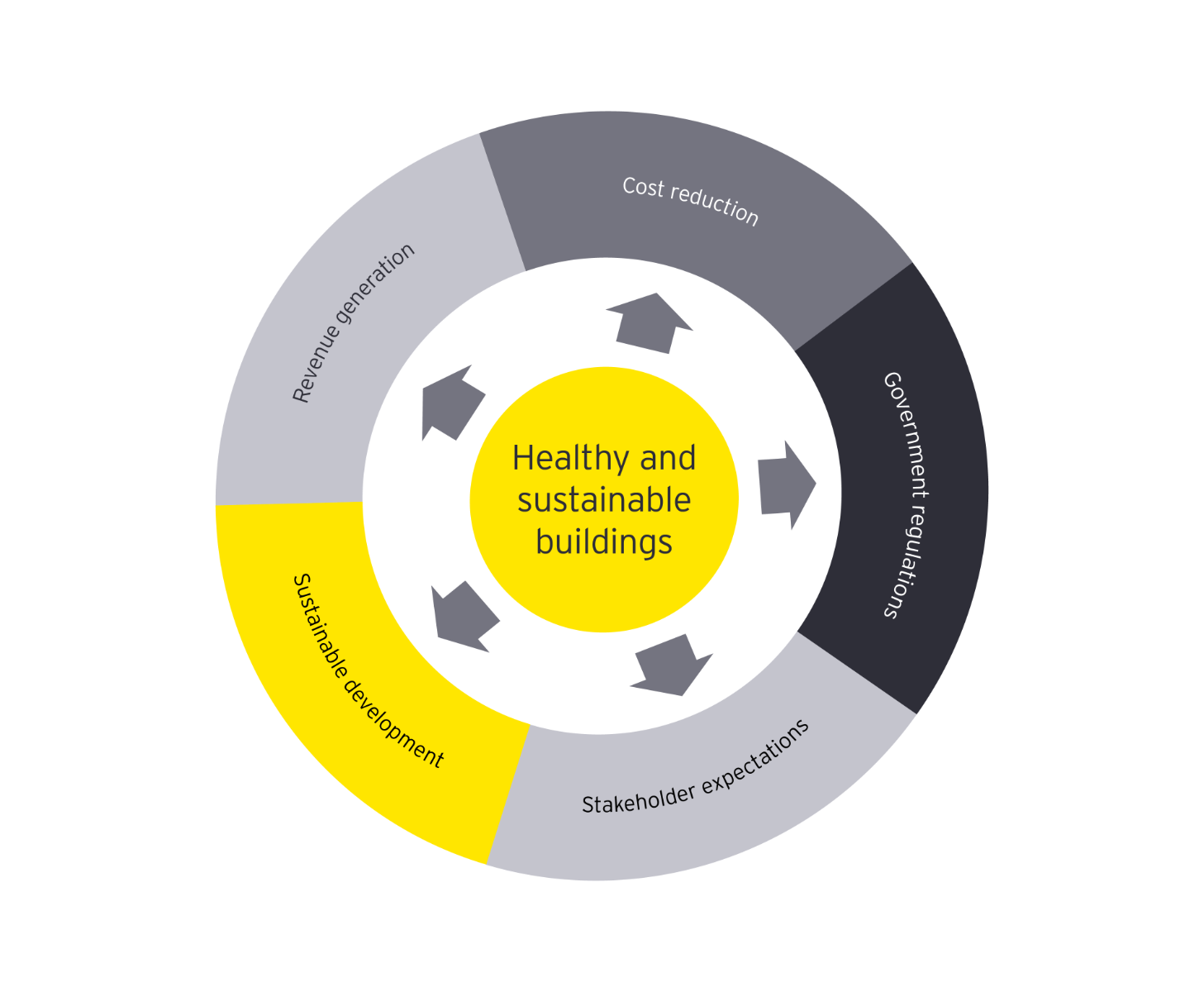
As landlords and commercial tenants develop, implement and manage healthy building efforts, they are finding that recognized standards, such as WELL and Fitwel, are helping to enable an effective framework and leading practices in the ownership, occupancy and management of their physical environments.
A sustainable and healthy building focuses on increasing the efficient use of resources — energy, water and materials — while enhancing positive building impacts on human health and the environment. Building owners and occupiers that are taking a proactive approach in furthering these efforts are not only building resilience now but also preparing themselves for what’s next and beyond.
Summary
As we move through and beyond the COVID-19 pandemic, the health, safety and well-being of employees, consumers and tenants are business imperatives integral to every company’s real estate-related environmental, social and governance (ESG) strategies.
Source: https://www.ey.com/en_us/real-estate-hospitality-construction/sustainable-healthy-buildings-meeting-real-estate-expectations